An emergency fund is money you can use to pay an unexpected bill or to get through a loss of income without having to borrow. The guideline most often quoted is three to six months of spending, but that is a rule of thumb, not a law of nature. This article sets out what UK data says about it: how many people have no such cushion, how long people who lose their job stay unemployed, how much state support replaces and where savings held their value best in 2026. The calculator further down shows how many months your own fund would last.
What an emergency fund is, and what does not belong in it
An emergency fund (also called a rainy day fund) is money you can reach within a few days, whose value does not go up and down, and which is not set aside for anything in particular. The glossary describes it as an emergency fund, and the key word in that definition is unexpected: the fund is there for events you cannot plan.
So it includes money in current and savings accounts and a sensible amount of cash. It does not include:
- money set aside for planned spending: a holiday, an insurance premium paid once a year, replacing the car. That is what a sinking fund is for. If you keep it together with your emergency fund, your emergency fund is smaller than you think,
- investments that might have to be sold at a loss at the wrong moment,
- an overdraft or a credit card: these are debts that become more expensive in an emergency, not a reserve.
How many people in the UK have no emergency fund
In September 2026, 28% of adults in Great Britain said their household could not afford to pay an unexpected, but necessary, expense of £850. A further 8% did not know. The figure comes from the ONS Opinions and Lifestyle Survey, which asks the same question every month; in September 2026, about 3,640 adults answered it.
One survey wave can move with sampling error: the ONS gives a 95% confidence interval of 25% to 30% for September. For context, over the previous twelve months the share stayed between 21% and 25%, so September 2026 was the highest reading since August 2024. It peaked at 33% during the cost of living crisis in 2022 and early 2023, and fell to 21% around the turn of 2025 and 2026, the lowest since the series began in November 2021. The share was highest among adults aged 30 to 49 (34%) and lowest among those aged 70 and over (17%).
Two things are worth knowing about this question. It covers Great Britain, not Northern Ireland. And although it resembles the question used across the European Union, it comes from a different survey with a different amount, so the results cannot be compared directly with EU figures.
The Financial Conduct Authority looked at the same problem from the other side, by asking about savings. In its Financial Lives survey of 17,950 adults (fieldwork February to June 2024), 10% of UK adults had no cash savings at all and another 21% had less than £1,000. The gaps between groups are large, with lone parents and people out of work most exposed:
Bar length: the full width corresponds to 70% of adults. The FCA counts cash in savings and current accounts, cash ISAs and investments, but not pensions or property. Shares exclude the 24% of adults who did not know the value of their savings or preferred not to say.
An emergency fund has two layers
Researchers at Vanguard split an emergency fund into two parts with different jobs:
- A cushion for unexpected bills: a broken washing machine, a car repair, the dentist. Vanguard suggests at least 2,000 US dollars or half a month’s spending, whichever is higher. For a UK reference point, the ONS survey above uses £850 as its example of an unexpected but necessary expense.
- A reserve for a loss of income: losing your job, illness, a gap between contracts. This is where three to six months of spending comes in.
The split also makes sense in the data. In a study published in April 2025, Vanguard asked 12,443 of its clients about their savings and how they felt about their finances. People with at least 2,000 dollars set aside had a 21% higher financial well-being score than people with no emergency savings. Three to six months of spending on top of that added a further 13%. Both results hold after taking income, debt and assets into account. Clients without emergency savings spent 7.3 hours a week thinking about and dealing with their finances; those with at least 2,000 dollars spent 3.7 hours.
How to read these results: the respondents are clients of a US investment firm, so they have above-average wealth, and the sample is American, not British. The study shows an association, not that an emergency fund by itself makes people more satisfied. Research among low-income households in the United States points the same way: households that saved for unexpected events had somewhat fewer hardships three years later, such as not having enough food (Gjertson, 2016). A small emergency fund is better than none.
Three months or six?
Three to six months is a guideline, not a rule. Where your own fund should sit between those numbers depends on three things: how long a loss of income could last, how much of it state support would replace and how much risk your household carries.
The UK starting point is not reassuring. According to the FCA, 42% of UK adults could not have covered their living expenses for three months or more if they lost their main source of household income, and 9% could have covered them for a week at most (May 2024).
How long people who lose their job stay unemployed
The ONS publishes, from the Labour Force Survey, how long people who are currently unemployed have been without work. In June to August 2026 there were about 1.7 million of them in the UK:
| Unemployed for | Thousands | Share |
|---|---|---|
| Up to 6 months | 946 | 55% |
| Over 6 and up to 12 months | 293 | 17% |
| Over 12 and up to 24 months | 273 | 16% |
| Over 24 months | 201 | 12% |
Source: ONS, table UNEM01 SA (Labour Force Survey, seasonally adjusted), people aged 16 and over. The row "over 12 and up to 24 months" is the ONS figure for over 12 months minus the figure for over 24 months. The ONS advises some caution with Labour Force Survey estimates following recent changes to the survey.
Close to half of unemployed people (45%) had been unemployed for more than six months, and more than a quarter (28%) for over a year. A note on interpretation: this is a snapshot of people who are out of work right now. Those who find a job quickly drop out of it quickly, so long spells are over-represented compared with the typical person who loses a job. Even so, the table shows that six months without work is not unusual.
What state support replaces
State support replaces only part of a lost income, and the main contribution-based benefit is time-limited. According to GOV.UK, New Style Jobseeker’s Allowance is paid for up to 182 days (about six months). It is a flat weekly amount that depends on age, not on your previous pay: up to £95.55 a week for people aged 25 or over and up to £75.65 for those under 25 (GOV.UK, as at 30 October 2026). It is usually available to people who have paid Class 1 National Insurance contributions as employees in the previous two tax years; self-employed people who paid only Class 2 contributions are generally not eligible, and GOV.UK notes that different eligibility rules apply in Northern Ireland. Your savings do not affect a New Style JSA claim.
Universal Credit works differently, because it is means-tested. GOV.UK states that you can claim only if you have £16,000 or less in money, savings and investments, and that payments are reduced if you have more than £6,000. Whether you qualify and how much you would receive is decided by the Department for Work and Pensions.
The rules may change: in its 2025 Pathways to Work Green Paper, the government consulted on introducing a new Unemployment Insurance for people who have paid into the system. Its response to the consultation was published in October 2025. As at 30 October 2026, GOV.UK still describes New Style JSA as set out above. The rules that apply are those in force when you claim.
What pushes a fund towards three months and what towards six
| Closer to three months | Six months or more |
|---|---|
| Two incomes in the household, either of which would cover essential spending | A single income, or a lone parent |
| A permanent job in a field where work is easy to find | Self-employment, freelance or contract work, an irregular income |
| Low fixed costs, no mortgage | A mortgage and other repayments that cannot be put off |
| A newer car, a recently renovated home | An older house or car where a large repair is likely |
| Good health, income protection insurance or generous sick pay from an employer | Health risks, caring for a relative |
For the self-employed and people with irregular income, a loss of income does not have to arrive all at once. A run of weaker months can be enough, and, as noted above, New Style JSA is generally not available to them.
How to work out your month of spending
An emergency fund is calculated from spending, not income. It has to cover what you spend, and spending is exactly what you pay for when income stops. The most accurate approach is to take your actual spending over the last twelve months and divide it by twelve. A full year also captures payments that come round only occasionally, such as insurance premiums, annual subscriptions or the winter heating bills.
For a stricter calculation, essential spending is enough: housing, energy, food, transport, loan repayments, insurance and medicines. In an emergency, spending on leisure and travel can be cut; repayments cannot.
To see what an average UK household spends, the ONS Family spending survey is the reference. In the financial year ending March 2025, average household spending was £676.60 a week, roughly £2,930 a month. Households had 2.3 people on average, and spending per person was £289.10 a week, roughly £1,250 a month. Housing, energy and food, counting mortgage interest and Council Tax, took £257.40 a week, about 38% of the total.
| Monthly | 3 months | 6 months | |
|---|---|---|---|
| Per person | £1,250 | £3,750 | £7,500 |
| Average household (2.3 people) | £2,930 | £8,790 | £17,580 |
Weekly ONS figures converted to months (× 52 ÷ 12) and rounded. "Total expenditure" in Family spending includes mortgage interest and Council Tax, but not repayments of the mortgage capital, so households with a mortgage need to add that part of their repayment.
An average is only a starting point. A family renting in London and a retired couple in a paid-off house in a small town have completely different months. That is why the calculator below works with your own figures.
The real change assumes CPI inflation of 3.5% (ONS, September 2026) and is calculated before tax. Whether you pay tax on savings interest depends on your other income and allowances; the rules are explained by HMRC on GOV.UK. The 1.66% average is the Bank of England's effective rate on households' sight deposits in September 2026, which covers current accounts and instant access savings accounts together, so it is not the rate any particular account pays. First layer: half a month's spending, but at least £850 (the unexpected expense used in the ONS Opinions and Lifestyle Survey).
Where to keep an emergency fund
An emergency fund has to meet three conditions, in this order: access (you can reach the money within a few days), safety (its value does not fluctuate and it is protected) and only then losing as little as possible to inflation. A high return is not the goal. Higher returns are paid for with risk or with poorer access, and an emergency fund needs to be available precisely when things are going badly.
| Where | Access | Does the value fluctuate? | Interest |
|---|---|---|---|
| Cash at home | Immediate | No, but it can be lost or stolen and is not covered by deposit protection | None |
| Current account | Immediate | No | Usually none or very little |
| Instant access savings account | Without notice, though terms differ | No | Instant access (sight) deposits, current and savings accounts together, averaged 1.66% (September 2026) |
| Notice account or fixed-term bond | After the notice period or at maturity; early withdrawal is often restricted or penalised | No | New time deposits averaged 4.42% (September 2026) |
| Shares, funds, crypto | Selling takes a few days | Yes, in a crisis the value can be much lower | Higher returns over the long run, uncertain in the short run |
Bank of England effective interest rates on individuals' deposits, gross, before tax. "Instant access balances" are what the Bank calls sight deposits: accounts from which the whole balance can be withdrawn without penalty, whether a current account or a savings account. All cash ISAs, including instant access ones, are counted as time deposits. Rates at individual banks can differ considerably.
CPI inflation was 3.5% in the year to September 2026. The average effective rate on households’ instant access balances was 1.66%, so money held there lost value in real terms on average. New time deposits (fixed-term bonds, notice accounts and cash ISAs) paid 4.42% on average, above inflation before tax, but most of that money is not available straight away. For an emergency fund this is not a failure: its job is not to earn, but to be at hand. The difference between leaving money in a current account and earning the average rate is still visible. On £10,000 it comes to about £166 a year before tax.
Tax on savings interest depends on your other income and allowances. According to GOV.UK, most people can earn some interest without paying tax on it, and interest on cash in an ISA is not taxed. This article does not calculate tax; HMRC’s rules are set out on GOV.UK.
Safety comes from deposit protection. If a UK-authorised bank, building society or credit union fails, the Financial Services Compensation Scheme (FSCS) automatically compensates up to £120,000 per eligible person, per institution. The limit rose from £85,000 on 1 December 2025. Banks that share a banking licence count as one institution, and joint accounts are protected up to the same limit per person. The FSCS says it pays compensation within seven working days. Anyone holding more than the limit with one institution can spread the money across several.
How to build an emergency fund from zero
Six months of spending is, for most people, a goal for years rather than months. That is why it helps to build in layers:
- The cushion for unexpected bills first. Half a month’s spending, and at least the £850 that the ONS uses as its example. It is an achievable goal, and it is what decides whether a broken washing machine turns into a debt.
- A fixed amount by standing order on payday. The money moves to a separate account before you have a chance to spend it. How much you can afford is shown by the budget calculator.
- One-off income. A tax refund or a bonus can move the fund forward by whole months.
- Keep the fund apart from planned spending. Otherwise the holiday quietly gets paid from the emergency fund, which is then missing when it is really needed.
- Top it up after using it. A fund that has been drawn on is rebuilt with the same standing order.
If you are paying off expensive debt, such as a credit card or an overdraft, you have to balance the emergency fund against repayments. Without the first layer, though, an unexpected bill often becomes another debt. You can work out the order of repayments in the debt payoff calculator.
When to use your emergency fund
Three questions help: is the expense necessary? Is it unexpected? Is it urgent? If the answer is yes three times (replacing a broken boiler in winter, a loss of income, essential treatment), this is exactly the situation the fund exists for. If not, it is a planned expense or a wish, and those belong to your other savings, not the emergency fund.
How to track it in Assetli
Assetli calculates your emergency fund from real figures rather than estimates:
- The financial health score in Analytics takes the money in your current and savings accounts plus cash and divides it by your average monthly spending over the last year. You see the result as a number of months of spending. The full score for the emergency fund requires six months.
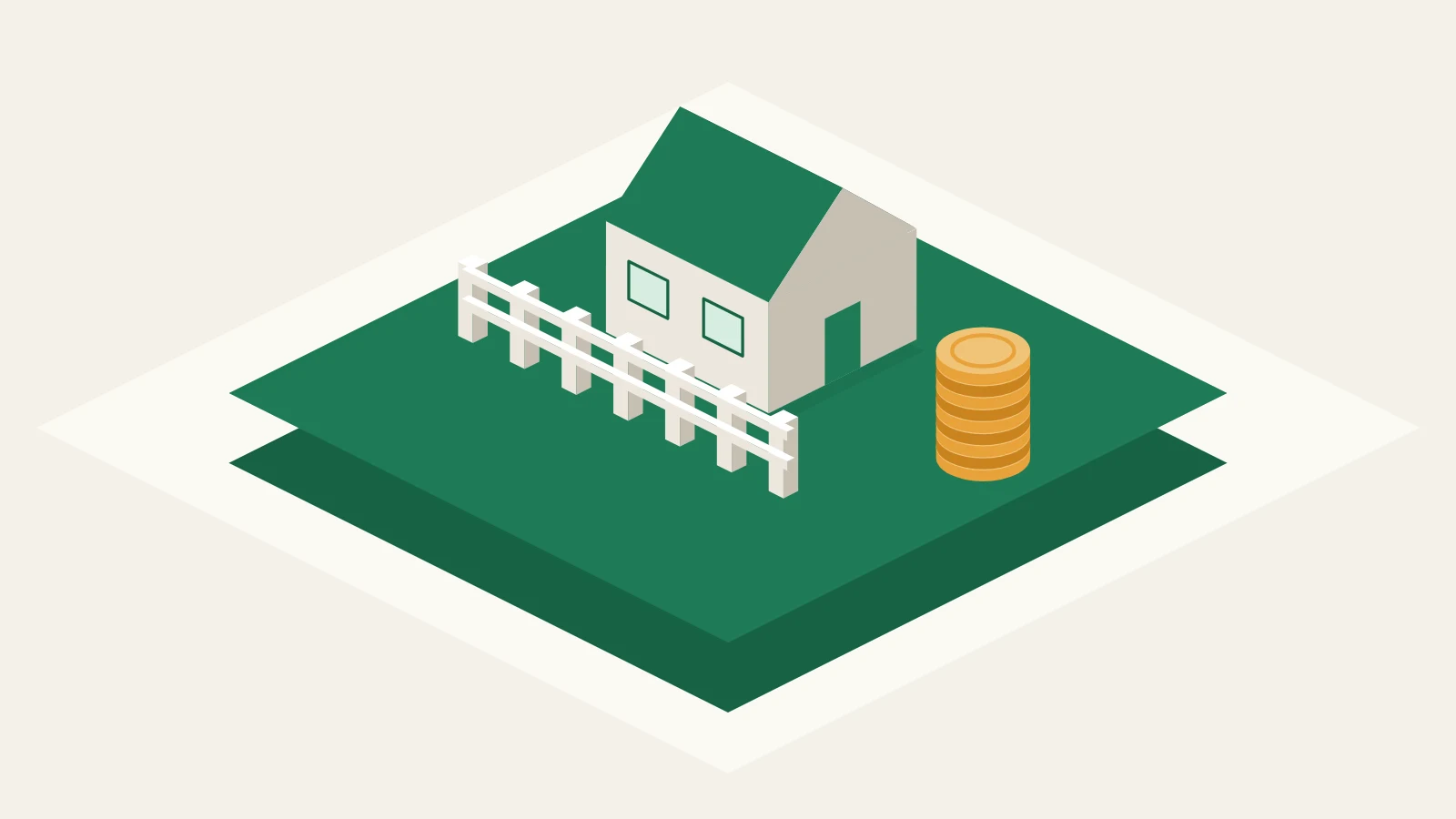
- The “My assets” picture on the overview shows the emergency fund as a fence in front of the house. One panel is one month of spending, and six panels close the fence.
- Savings envelopes in bank accounts keep the emergency fund apart from money for a holiday or a car, even when both sit in the same savings account.
An emergency fund without the arithmetic: Assetli adds up the balances of all your accounts, works out your average spending from your transactions and tells you how many months your fund would last. See how personal finance analytics works.
Frequently asked questions
How big should an emergency fund be?
The figure most often given is three to six months of spending. At average UK household spending (about £2,930 a month according to the ONS for the financial year ending March 2025), that is roughly £8,790 to £17,580. Closer to six months or more suits a single income, self-employment, an irregular income or a mortgage.
Is an emergency fund based on income or on spending?
On spending. The fund has to cover what you spend when your income stops. The most accurate approach is to take your actual spending over the last twelve months, including loan repayments and annual payments, and divide it by twelve.
Where is the best place to keep an emergency fund?
Somewhere you can reach it within a few days and where its value does not fluctuate: a current account or an instant access savings account. The FSCS protects deposits up to £120,000 per eligible person at each bank, building society or credit union. Whether interest is taxed depends on your income and allowances, as explained on GOV.UK. Shares and funds are not suitable, because in a crisis their value can be much lower.
How many people in the UK have no emergency fund?
In September 2026, 28% of adults in Great Britain said their household could not afford an unexpected but necessary expense of £850 (ONS, Opinions and Lifestyle Survey). According to the FCA, 10% of UK adults had no cash savings at all and another 21% had less than £1,000 in 2024. Among lone parents, 69% had no savings or investments, or less than £1,000.
Will state benefits replace an emergency fund?
Only in part. According to GOV.UK, New Style Jobseeker's Allowance is a flat weekly amount paid for up to 182 days, based on National Insurance contributions, and savings do not affect it. Universal Credit is means-tested: it is reduced if you have more than £6,000 in savings and investments and cannot usually be claimed above £16,000. Meanwhile, 45% of unemployed people had been unemployed for more than six months (ONS, June to August 2026).
Does money for a holiday or a car belong in the emergency fund?
No. An emergency fund is for unexpected events. Money for planned spending belongs in a separate fund or envelope. If you keep it together with the emergency fund, the fund is in reality smaller than it looks.
Conclusion
An emergency fund is not a figure from a rule book but insurance calculated from your own spending. The UK data says three things. A sizeable minority has little to fall back on: more than a quarter of adults in Great Britain say they could not cover an unexpected £850 bill, and lone parents and people out of work are the most exposed. A loss of income can last longer than state support covers, since close to half of unemployed people have been out of work for over six months and New Style JSA runs for up to 182 days. And money on instant access lost value in real terms in 2026, because the average rate stayed well below inflation. Start with the first layer, carry on with a standing order and track your fund in months of spending. How to see where your money goes each month is explained in the article Household cash flow.
Related glossary terms
Sources and references
- Office for National Statistics. Public opinions and social trends, Great Britain: household finances, 2 to 27 September 2026 edition (Table 2: could your household afford an unexpected, but necessary, expense of £850; Table 12: trends since November 2021), published 16 October 2026. ons.gov.uk
- Financial Conduct Authority. Financial Lives 2024: key findings from the FCA’s Financial Lives May 2024 survey (published 16 May 2025), selected key findings and chapter 3, including Table 3.1. fca.org.uk
- Office for National Statistics. UNEM01 SA: Unemployment by age and duration (seasonally adjusted), June to August 2026, released 20 October 2026. ons.gov.uk
- GOV.UK (Department for Work and Pensions). Jobseeker’s Allowance (JSA): how it works and eligibility, checked 30 October 2026. gov.uk
- GOV.UK (Department for Work and Pensions). Universal Credit: eligibility and what you’ll get, checked 30 October 2026. gov.uk
- Department for Work and Pensions. Government Response to the Pathways to Work Consultation (CP 1421, October 2025). gov.uk
- Office for National Statistics. Family spending in the UK: April 2024 to March 2025, released 11 June 2026. ons.gov.uk
- Office for National Statistics. Family spending workbook 1: detailed expenditure and trends, financial year ending 2025 (Table 3.1 and Table 4.3). ons.gov.uk
- Office for National Statistics. Consumer price inflation, UK: September 2026, released 21 October 2026. ons.gov.uk
- Bank of England. Effective interest rates – September 2026 (Table A: individuals’ sight and time deposits), published 29 October 2026. bankofengland.co.uk
- Bank of England. Money and Credit – September 2026, published 29 October 2026. bankofengland.co.uk
- Bank of England. Further details about effective interest rates data (definitions of sight and time deposits). bankofengland.co.uk
- GOV.UK (HM Revenue and Customs). Tax on savings interest. gov.uk
- GOV.UK (HM Revenue and Customs). Individual Savings Accounts (ISAs): how ISAs work. gov.uk
- Financial Services Compensation Scheme. Banks, building societies and credit unions: what we cover. fscs.org.uk
- Vanguard. The relationship between emergency savings, financial well-being, and financial stress (April 2025). corporate.vanguard.com
- Gjertson, L. Emergency Saving and Household Hardship. Journal of Family and Economic Issues 37 (2016), pp. 1–17. doi.org
Want to stay on top of your finances?
Assetli helps you track expenses, investments, and assets in one place with an AI assistant.
Try Assetli for free